U.S.
As nearly 2,000 universities scrap ACT and SAT, Dartmouth reverses course
Media Landscape
This story is a Media Miss by the right as only 0% of the coverage is from right leaning media.
Learn more about this dataLeft 43%
Center 57%
Right 0%
Bias Distribution Powered by Ground News™
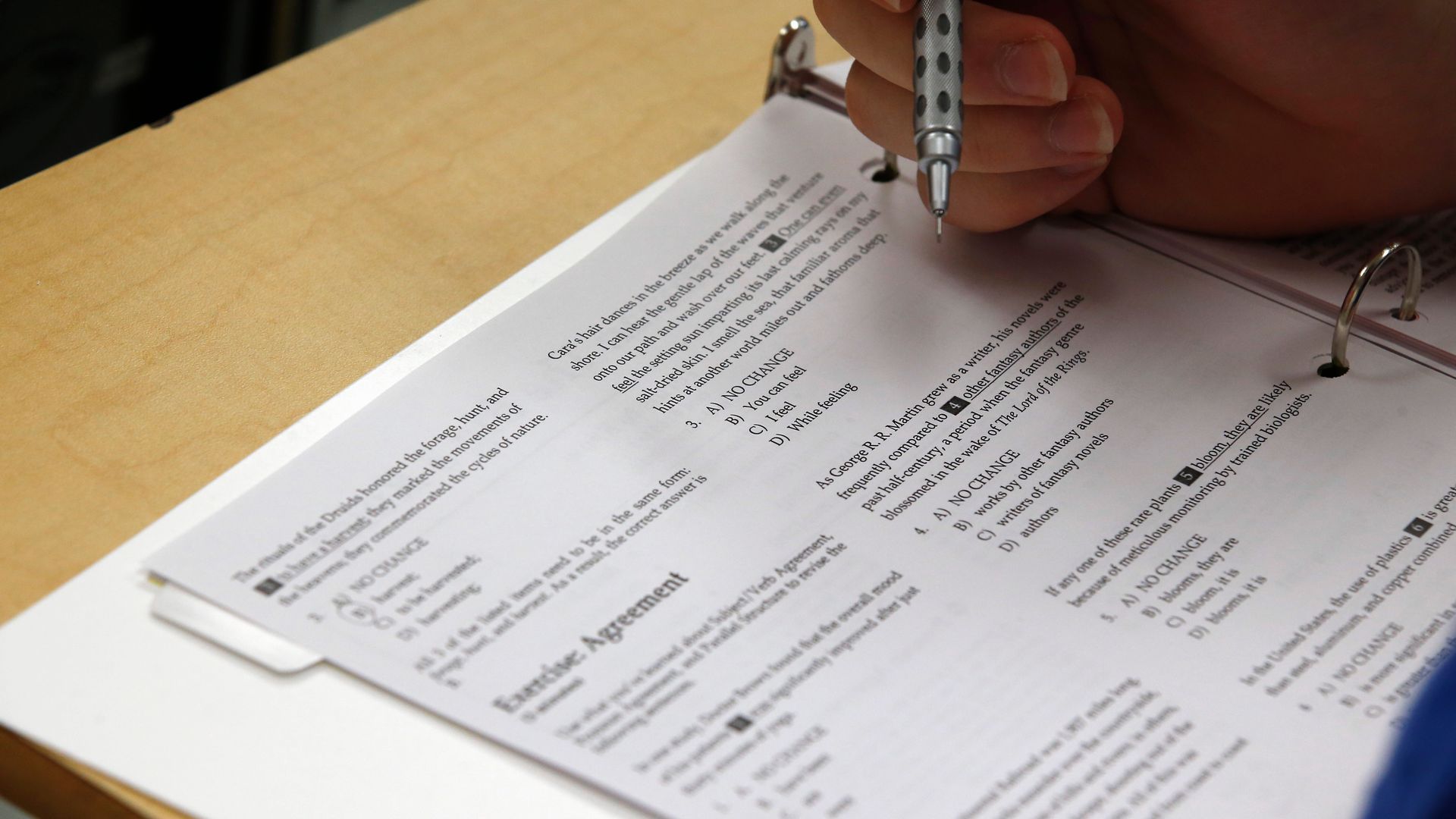
Nearly 2,000 U.S. colleges and universities have made the SAT and ACT optional for admission. However, Dartmouth University recently announced that it is reinstating the requirement of submitting ACT and SAT scores for admission. The renewed requirement will begin for the class of 2029.

Download the SAN app today to stay up-to-date with Unbiased. Straight Facts™.
Point phone camera here
Dartmouth’s decision to reinstate standardized testing requirements is going against the grain. Since the COVID-19 pandemic, the number of schools ditching the standardized tests has increased to 1,900. So far, more than 80% of four-year schools no longer require the assessments, according to Inside Higher Ed.
However, schools had already started to move away from standardized tests prior to the pandemic over concerns of inequities for students in historically marginalized communities. Racial inequity concerns combined with testing centers closing during the pandemic prompted the number of schools scrapping the ACT and SAT to surge.
Dartmouth, like many other schools, suspended the ACT and SAT exams in June of 2020, during the height of COVID. University officials said at the time, the “test optional” policy was a “short-term practice rather than an indefinite policy.”
Now, some schools like Dartmouth are bringing back their pre-COVID requirements, citing research that shows the tests better forecast how a student will do in their first year of college.
Dartmouth researchers said the data shows standardized test scores are “highly predictive of academic achievement at Dartmouth.” The data also suggests that GPA and SAT scores maintain a linear relationship.
However, not everyone in academia agrees with the requirement.
The entire University of California system does not consider the ACT or SAT when reviewing applicants over concerns of racial bias. In a 2021 settlement, the state agreed to end the use of standardized test scores to broaden access for minorities and students with disabilities. The 2019 lawsuit alleged that by using the ACT and SAT scores for admissions, it discriminates against applicants on the basis of their race, wealth, and disability, according to The New York Times.
On top of racial discrimination concerns, research by the University of Chicago argues that standardized testing is obsolete. The authors of the study contend standardized exam scores are “weak” indicators of graduation, and course grades are more “critical indicators” of academic performance in college.
Despite the criticism of standardized testing, the Wall Street Journal reported that 17 states have elected to use either the ACT or SAT to meet high school testing requirements to comply with federal law.
The debate over standardized testing doesn’t appear to be going anywhere. The New York Times reported that some university administrators are wondering if ditching the tests was a mistake.
Robert May, a professor at the University of California, told the Times that the elimination of the testing requirement in California would only add confusion and significant costs to the admissions process and make acceptance even more subjective in the short term.
Universities adopting the practice of “testing optional” or “test free” admissions comes as more high school teachers are handing out better grades. However, better grades are not translating to higher test scores, according to the College Board, which administers the SAT.
From 1998 to 2017, researchers with the College Board found that the proportion of high school seniors graduating with an “A” average grew by more than 8%, while SAT scores fell by 24 points, according to the USA Today.
ACT researchers also found similar results. Researchers found that from 2010 to 2021, GPAs for high school seniors rose from 3.17 to 3.36. The greatest inflation was seen between 2018 and 2021. During that same time period, ACT scores remained stagnant or fell.
MIT also announced it is bringing back its standardized testing requirements for first year and transfer students.
“Just getting A’s is not enough information for us to know whether students are going to succeed or not,” MIT Dean of Admission Stuart Schmill told The New York Times.
[LAUREN TAYLOR]
NEARLY TWO-THOUSAND U-S COLLEGES AND UNIVERSITIES HAVE ADOPTED THE TREND of making THE S-A-T AND A-C-T OPTIONAL FOR ADMISSION.
NOW ONE IVY LEAGUE SCHOOL IS SAYING ITS JUMPING OFF THAT TRAIN.
DARTMOUTH is BECOMING ONE OF THE FIRST HIGH-PROFILE SCHOOLS IN THE NATION — AND THE FIRST AMONG THE IVIES — TO RETURN TO THE TESTING REQUIREMENTS.
SINCE THE PANDEMIC, THE NUMBER OF SCHOOLS DITCHING THE STANDARDIZED TESTS — HAS JUMPED TO MORE THAN 19 HUNDRED, WITH OVER 80-PERCENT OF FOUR-YEAR SCHOOLS NO LONGER REQUIRING THEM, ACCORDING TO “INSIDE-HIGHER-ED-DOT-COM”.
THE MOVE AWAY FROM THE TESTS HAD ALREADY BEGUN — PRIOR THE SPREAD OF COVID — OVER CONCERNS OF INEQUITIES FOR STUDENTS IN HISTORICALLY MARGINALIZED COMMUNITIES.
WITH TESTING CENTERS CLOSED DURING THE HEALTH CRISIS — THE NUMBER OF SCHOOLS SCRAPPING THE S-A-T AND A-C-T SURGED.
DARTMOUTH, LIKE MANY OTHER SCHOOLS, SUSPENDED A-C-T AND S-A-T ASSESSMENTS IN JUNE OF 2020, DURING THE HEIGHT OF COVID-19.
UNIVERSITY OFFICIALS SAID AT THE TIME, THE “TEST-OPTIONAL” POLICY WAS A “SHORT-TERM PRACTICE RATHER THAN AN INDEFINITE POLICY.”
NOW SOME SCHOOLS, LIKE DARTMOUTH, ARE BRINGING BACK THEIR PRE–COVID REQUIREMENTS, CITING RESEARCH SHOWING THE TESTS BETTER FORECAST HOW A STUDENT WILL DO IN HIS OR HER FIRST YEAR OF COLLEGE.
DARTMOUTH RESEARCHERS SAY THE DATA SHOWS STANDARDIZED TEST SCORES ARE “HIGHLY PREDICTIVE OF ACADEMIC ACHIEVEMENT AT DARTMOUTH.”
AND THAT G-P-A AND S-A-T SCORES MAINTAIN A LINEAR RELATIONSHIP.
HOWEVER, NOT EVERYONE IN ACADEMIA AGREES.
THE ENTIRE UNIVERSITY OF CALIFORNIA SYSTEM — DOES NOT CONSIDER THE TESTS — WHEN REVIEWING APPLICANTS OVER CONCERNS OF RACIAL BIAS.
IN A 2021 SETTLEMENT, THE STATE AGREED TO END THE USE OF TEST SCORES– IN ORDER TO BROADEN ACCESS FOR MINORITIES AND STUDENTS WITH DISABILITIES.
THE LAWSUIT ALLEGED USING THE A-C-T AND S-A-T FOR ADMISSIONS DISCRIMINATES AGAINST APPLICANTS ON THE BASIS OF THEIR RACE, WEALTH AND DISABILITY.
ON TOP OF RACIAL DISCRIMINATION CONCERNS, RESEARCH BY THE UNIVERSITY OF CHICAGO ARGUES — STANDARDIZED TESTING IS OBSOLETE.
THE AUTHORS OF THE STUDY CONTEND STANDARDIZED EXAM SCORES ARE “WEAK” INDICATORS OF GRADUATION…
AND that COURSE GRADES ARE MORE “CRITICAL INDICATORS” OF ACADEMIC PERFORMANCE.
DESPITE CRITICISM OF STANDARDIZED TESTING, THE WALL STREET JOURNAL REPORTS – 17 STATES HAVE ELECTED TO USE EITHER THE A-C-T OR S-A-T TO MEET HIGH SCHOOL TESTING REQUIREMENTS – TO COMPLY WITH FEDERAL LAW.
THE NEW YORK TIMES REPORTS, SOME UNIVERSITY ADMINISTRATORS ARE WONDERING IF DITCHING THE TESTS WAS A MISTAKE.
AND WHILE MORE HIGH SCHOOL TEACHERS ARE HANDING OUT BETTER GRADES –
IT’S NOT TRANSLATING TO BETTER S-A-T SCORES.
IT’S A PROBLEM KNOWN AS “GRADE INFLATION.”
OFFICIALS WITH THE COLLEGE BOARD — WHICH ADMINISTERS THE S-A-T — SAID
FROM 19-98 TO 20-16– THE PROPORTION OF HIGH SCHOOL SENIORS GRADUATING WITH AN “A” AVERAGE– GREW BY MORE THAN 8-PERCENT–
WHILE S-A-T SCORES HAVE FALLEN BY 24 POINTS.
AND THE A-C-T, FOUND FROM 20-10 TO 20-21 G-P-AS FOR HIGH SCHOOL SENIORS INCREASED FROM 3.17 TO 3.36– WITH THE GREATEST INFLATION BETWEEN 20-18 AND 20-21. AT THE SAME TIME, A-C-T SCORES HAVE REMAINED STAGNANT OR FALLEN.
AFTER SUSPENDING A-C-T AND S-A-T IN 2020 AND 20-21–
M-I-T BROUGHT BACK ITS STANDARDIZED TEST REQUIREMENTS FOR FIRST YEAR AND TRANSFER STUDENTS.
THE DEAN OF ADMISSIONS AT M-I-T SAID, “JUST GETTING A’S IS NOT ENOUGH INFORMATION FOR US TO KNOW WHETHER THE STUDENTS ARE GOING TO SUCCEED OR NOT.”
Media Landscape
This story is a Media Miss by the right as only 0% of the coverage is from right leaning media.
Learn more about this dataLeft 43%
Center 57%
Right 0%
Bias Distribution
9 other sources covering this story
Total News Sources
9
Leaning Left
3
Center
4
Leaning Right
0
Last Updated
6 months ago
Bias Distribution Powered by Ground News™
MOST POPULAR
-
 AP Images
N. Korea hackers steal military secrets, hit Air Force bases, NASA, US says
-
 Getty Images
A convicted child rapist is competing in Paris Games, many want to know why
-
 AP
AP
Barack and Michelle Obama endorse Kamala Harris for president
-
 Reuters

Attacks disrupt trains ahead of Olympics opening ceremony