
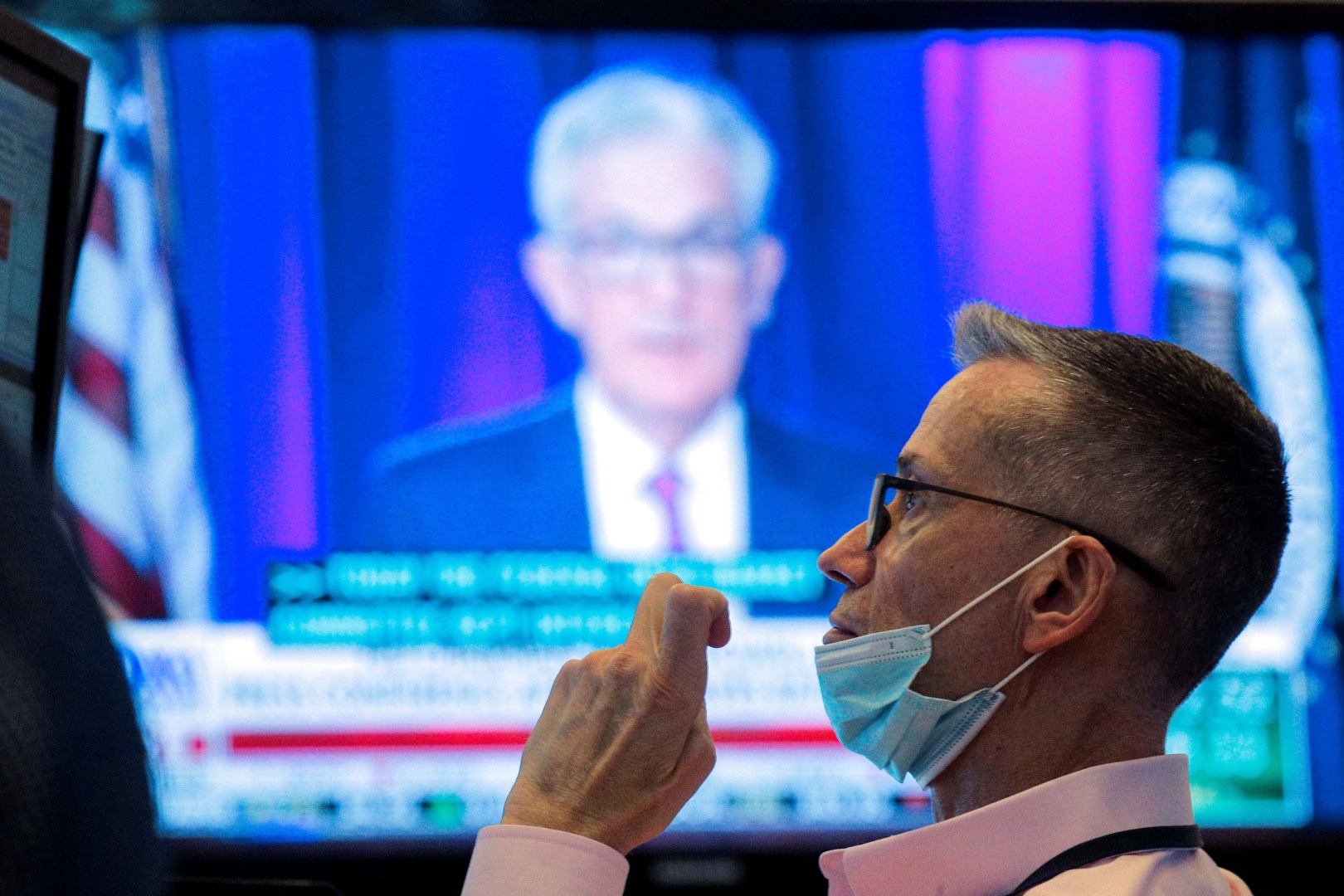

Jerome Powell, Federal Reserve Board Chairman: “At the Federal Reserve, we are strongly committed to achieving the monetary policy goals that Congress has given us — maximum employment and price stability. Today, the Federal Open Market Committee kept interest rates near zero and maintained our current pace of asset purchases. These measures, along with our strong guidance on interest rates and on our balance sheet, will ensure that monetary policy will continue to support the economy until the recovery is complete.”
“If progress continues broadly as expected, the committee judges that a moderation in the pace of asset purchases may soon be warranted. We also discussed the appropriate pace of tapering asset purchases once economic conditions satisfy the criterion laid out in the committee’s guidance. While no decisions were made, participants generally view that so long as the recovery remains on track, a gradual tapering process that concludes around the middle of next year is likely to be appropriate.”
“The timing and pace of the coming reduction in asset purchases will not be intended to carry a direct signal regarding the timing of interest rate lift off for which we have articulated a different and substantially more stringent test. We continue to expect that it will be appropriate to maintain the current zero to one quarter percent target range for the federal funds rate until labor market conditions have reached levels consistent with the committee’s assessment of maximum employment and inflation has risen to 2% and is on track to moderately exceed 2% for some time.”
“Substantial further progress toward our goals is the test for beginning the taper and the taper takes some months in, everyone’s figuring. So, you’re going to be well away from satisfying the lift off test when we begin to taper. So, in terms of the lift off test, though, you know, it is what we adopted last September. It’s labor market conditions consistent with maximum employment. And while we while we have interesting signs that in many ways the labor market is very tight, we also have lots of slack in the labor market. And we think that that those imbalances will sort themselves out. Inflation at 2% and on track to achieve moderately higher, inflation over 2%. You know, that really depends on the path of inflation. If inflation remains higher during the course of 2022, then we may already have met that test by the time we reach lift off.”
“Yes, we need to make changes and we’re going to do that as a consequence of this. This will be a thoroughgoing and comprehensive review. We’re going to gather all the facts and look at ways to further tighten our rules and standards.”
“I think if the economy continues to progress broadly in line with expectations, then I think and also the overall situation is appropriate for this, then I think we could easily move ahead at the next meeting or not, depending on whether we whether we feel like that those tests are met.”
“It is the accumulated progress. So, you know, for me, it wouldn’t take a knockout, great, super strong employment report. It would take a reasonably good employment report for me to feel like that test is met. And others on the committee, many, many on the committee, feel that the test is already met. Others want to see more progress. And, you know, we’ll work it out as we go. But I would say that in my own thinking, the test is all but met. So, I don’t personally need to see a very strong employment report, but I’d like to see a good, decent employment report.”
MOST POPULAR
-
 Getty Images
Harvey Weinstein’s rape conviction overturned, victims could see new trial
-
 Getty Images
Pythons decimate Florida’s wildlife, is eating them the answer?
-
 Getty Images
Trump could lose Secret Service protection if found guilty
-
 AP Images
Argentina asks to join NATO as Milei looks to enhance security, strengthen ties