Business
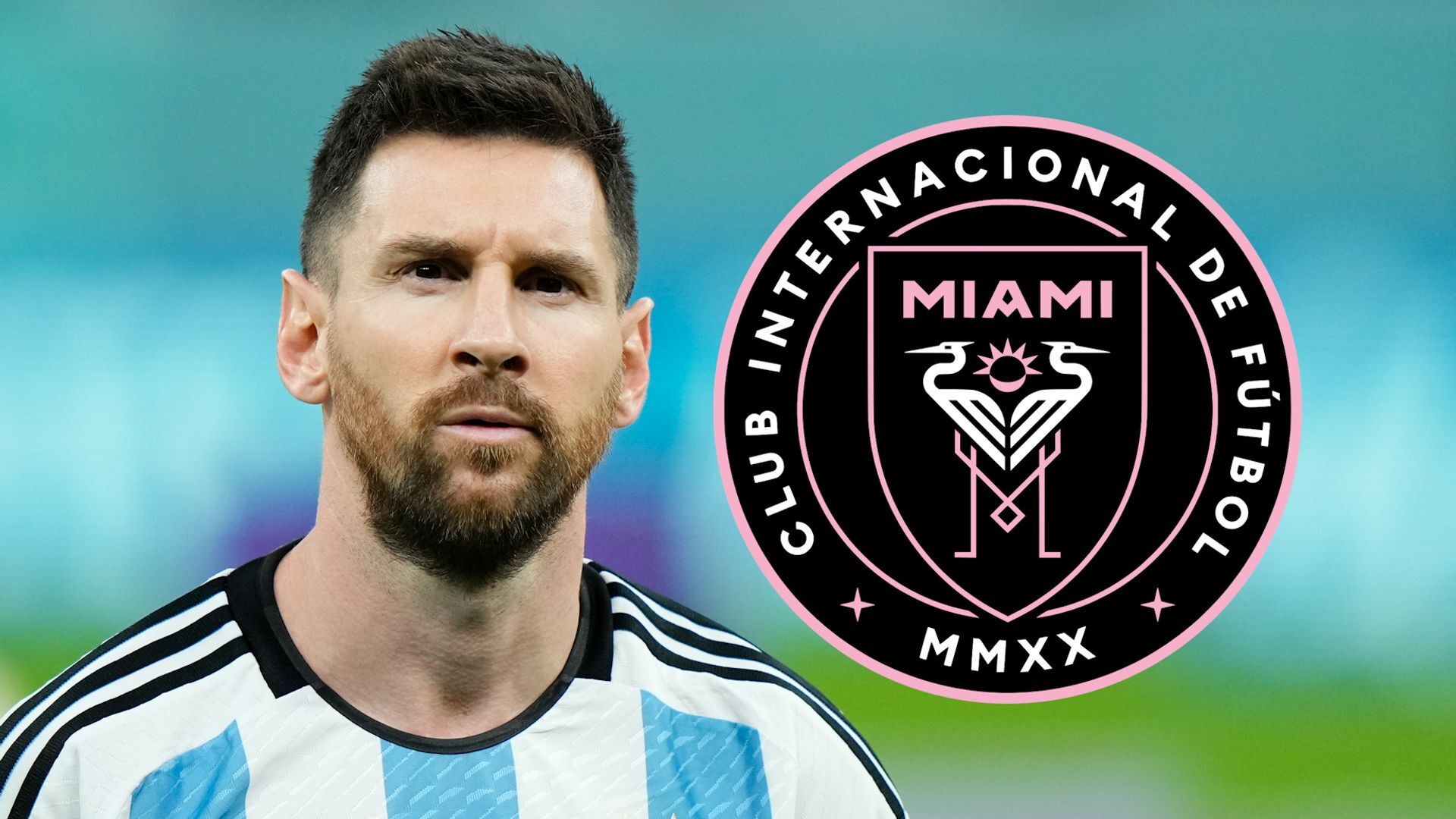
The ‘fancy financing’ used to draw Lionel Messi to Miami over Saudi’s $1.5B offer
Media Landscape
See who else is reporting on this story and which side of the political spectrum they lean. To read other sources, click on the plus signs below.
Learn more about this dataLeft 0%
Center 0%
Right 0%
Bias Distribution Powered by Ground News™
SIMONE DEL ROSARIO: SOCCER SUPERSTAR LIONEL MESSI SHOCKED THE WORLD THIS WEEK, ANNOUNCING HE’S TURNING DOWN MORE THAN A BILLION DOLLARS FROM SAUDI ARABIA TO PLAY INSTEAD IN…MIAMI. THE REIGNING WORLD CUP CHAMPION WILL BRING HIS GOAT SKILLS TO STRUGGLING MLS TEAM INTER MIAMI, OWNED BY NONE OTHER THAN DAVID BECKHAM. TO TALK ABOUT THE BIG SCORE AND THE DEETS BEHIND THE DEAL, I’M JOINED BY SPORTS ECONOMIST VICTOR MATHESON, PROFESSOR OF ECONOMICS AT COLLEGE OF THE HOLY CROSS IN MASSACHUSETTS. Victor, how shocked were you to hear that one of the greatest soccer players of all time was turning down a contract from the Saudis reportedly worth more than $400 million per year to come to Major League Soccer, which, as we know, on a global scale, is just not one to usually score this kind of talent.
VICTOR MATHESON: Well, so Messi had been linked with MLS for many years prior to this. But in the last couple of years, we had seen that gigantic contract go to Christian Ronaldo to go play in Saudi Arabia. And so it looked, at least initially, like there’s no way that MLS would be able to have the sort of money needed to pry away a player like Messi for the sort of money that the Saudis had already shown they were willing to pull up for Ronaldo.
SIMONE DEL ROSARIO: Yeah, and we know the Saudis are not really happy with this development. And they’ve warned messy, you know, this deal is not going to be the same in a couple of years. If you change your mind, as you mentioned, paying him was a difficult challenge for anyone. He wanted to go back to Barcelona, but they couldn’t pay him again. And the Saudis were offering the world as far as compensation was concerned,
we see that MLS and inter Miami got creative on this one, I know that the deal is not final. But here are the things that have been floated an ownership stake after playing commercial partnerships with Apple and Adidas, and no salary restrictions. How unusual is this deal structure in sports in the US?
VICTOR MATHESON: So what’s really interesting is the only other soccer player that we can actually think of who has been linked to a deal like this is no other than David Beckham. Right? So David Beckham came to the United States about 15 years ago, again, probably one of the three biggest highest profile players ever to play in the United States. That would be Pele back in the 1970s, Beckham, and then, of course, Messi. And what Beckham got, as part of his deal is not only the largest salary paid to any MLS player, but he also got the rights to an ownership of a club at some point in the future. And he turned those rights into Miami, right, which is now going out and hiring Messi. So it looks like this is a sort of full circle deal. We see exactly what happened to Beckham 15 years ago. And it looks like this will be the same sort of offer being made to Messi now.
SIMONE DEL ROSARIO: There was so much hype back in 2007 when Beckham came over everyone saying that this was going to change the landscape of MLS. Do you think that it did that back then? And how would you compare the potential impact of Messi being here now.
VICTOR MATHESON: So it absolutely changed things it put United States on the map in terms of professional soccer, we’ve already kind of been on the map in terms of international soccer, but it put Major League Soccer on the map for sure. This was a league that had gone from 12 teams down to 10 teams, a couple teams had been contracted, including the Miami team that had been playing there earlier. And this was a gigantic jolt. He attracted gigantic crowds all across the United States. It was an actual player that non soccer fans could identify playing in the United States. And what we saw from the basically the moment that Beckham came, we saw a whole slew of new investors coming into the into the league. We’ve gone from a league of 10 teams when Beckham came into the league to to a league with 20 over 25 teams. So he’s been there’s almost no under estimating how big an impact Beckham had. Now, in terms of Messi, he’s coming into a league that’s already extremely well established. I don’t think he has to be the same sort of ambassador for the sport that Pele was back in the 1970s with the old NASL or that Beckham was for the early days of MLS. I think he’ll just be an extremely popular player who, who crowds are going to turn out for sure. Miami has already talked about installing as many new seats as they can in their temporary stadium before moving to a new stadium here and you know, it’ll be a gigantic boost for the individual team. It’s not clear that MLS needs that same shot in the arm that it did back when Beckham.
SIMONE DEL ROSARIO: Yeah, to your point as far as the teams are concerned, MLS is going to be the fastest major league sports in the US to grow to 30 teams. They’re going to do it in under three decades and the next closest was the end NBA, which took twice as long to get to 30 teams. So you’re right, Messi is really going into an avenue that has already been seeing tremendous growth. I’m curious more about this commercial aspect of his deal. You know, I was thinking about where have we seen that push to compensate players in a more commercial way before. And we’re really seeing it in the NIL, which obviously those athletes don’t get paid by the schools. So they’re looking at marketability in which school they go to. But with this Apple deal, especially now that the MLS is experimenting with this, do you think we’re going to be seeing this more in other sports?
VICTOR MATHESON: We certainly could, although again, most other sports have deeper pockets in MLS. And you can pay, for example, a LeBron James or you can pay a Patrick Mahomes directly out of revenues being generated by the sport rather than having to come up with some sort of fancy financing to afford a player of messy stature. I also suspect that these sort of, again, NIL deals but this isn’t an IRL deal. This is just a flat out sponsorship deal, is the sort of thing that attracted Messi to the United States instead of Saudi Arabia, he did take the risk of going to Saudi Arabia and tarnishing his brand, which is undeniably the best brand in modern soccer. He’s, he’s without question. One of the greatest players ever to play the game. And I think he thought, look, for I could take a few 100 million dollars a day, money that I don’t need. I’m already the highest paid athlete in the world. But it could tarnish my long term earning capacity. I’m only going to be playing for a few more years as an actual player, but I could be a brand ambassador for decades. Last thing I want to do is tarnish that decades of brand ambassadorship by taking a job at the end of my career at a place that clearly has a troubling kind of troubling associations.
SIMONE DEL ROSARIO: Yeah, Victor, that’s such a good point. It’s obviously not the path that Cristiano Ronaldo made. And he used to be one of the, you know, biggest players out there as far as endorsements went, but there is a question about when you go to Saudi Arabia to play for them. What are you compromising? What kind of blow Do you think this does deliver to the Saudis?
VICTOR MATHESON: Well, I think we see a case here where you know, money doesn’t necessarily buy everything. And we’re looking at kind of that full package with Messi saying, Do I need to associate with the Saudis in order to get what’s going to be the best deal for me? On the other hand, we’ve seen exactly the opposite thing with golf right? Where we have a potential merger coming between live golf against sponsored by the Saudis and the PGA. I think a lot of the golf professionals that stayed in PGA didn’t want that association either. But at least based on preliminary toxic merger here, sometimes it’s just too hard to resist that huge amount of money that’s coming in from the Middle East. Same thing with FIFA again placing the World Cup in Qatar last year.
SIMONE DEL ROSARIO: Yeah, mixed bag for Saudi Arabia this week when it comes to their efforts to really grow in sports sports economist Victor Matheson, professor of economics at College of the Holy Cross in Massachusetts. Really appreciate your insight today. Thank you.
VICTOR MATHESON: Well, thank you for having me.
Media Landscape
See who else is reporting on this story and which side of the political spectrum they lean. To read other sources, click on the plus signs below.
Learn more about this dataLeft 0%
Center 0%
Right 0%
Bias Distribution
3 other sources covering this story
Total News Sources
3
Leaning Left
0
Center
0
Leaning Right
0
Last Updated
1 year ago
Bias Distribution Powered by Ground News™
MOST POPULAR
-
 AP Images
N. Korea hackers steal military secrets, hit Air Force bases, NASA, US says
-
 Getty Images
A convicted child rapist is competing in Paris Games, many want to know why
-
 AP
AP
Barack and Michelle Obama endorse Kamala Harris for president
-
 Reuters

Attacks disrupt trains ahead of Olympics opening ceremony