
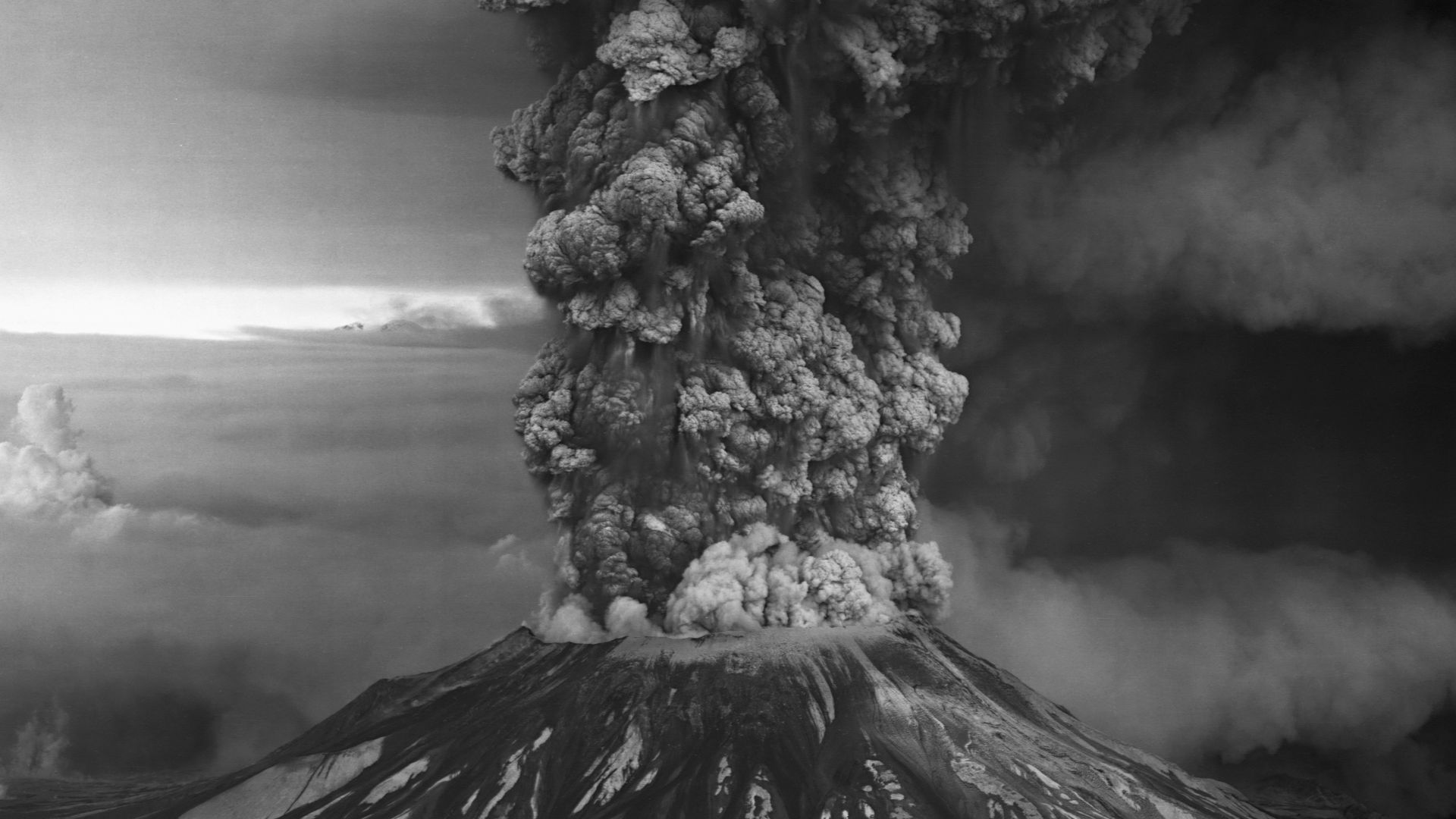

Since the beginning of February, the U.S. Geological Survey (USGS) has monitored approximately 350 earthquakes under Mount St. Helens, a notable increase in seismic activity. On Tuesday, June 18, the USGS unveiled its findings.
On May 18, 1980, the largest volcanic eruption in American history occurred as Mount St. Helens blew its top in Washington, spreading 540 million tons of ash across 22,000 square miles of the United States. The blast and resulting ash killed 57 people and caused around $1 billion in damage.
So, 44 years after its last major eruption, is Mount St. Helens due for another catastrophic eruption? Geologists with the agency don’t think that it is likely.

Download the SAN app today to stay up-to-date with Unbiased. Straight Facts™.
Point phone camera here
USGS officials said that the increase in seismic activity is likely due to the arrival of additional magma inside the volcano. It’s a process they call “recharge,” and it’s a common occurrence for this geological feature.
Geologists said this process can play out for years without an eruption, so there’s no need to worry about it right now as they continually monitor the activity for abnormalities.
The USGS maintains that there are no signs the mountain will blow anytime soon. The agency asserts that “short-term increases in earthquake rates are common at Mount St. Helens,” providing examples of increases in seismic activities over the past four decades.
The agency said that there are no significant changes found and that there is no change to alert levels at this time. The USGS the mountain’s activity “remains at normal, background levels of activity,” and said that most of the earthquakes monitored by them are likely too small to be detected by any person on the ground.
If individuals are worried about it, the USGS assures people that it’s constantly keeping a close eye on the volcano and will issue alerts as needed.
Tags: Central United States Earthquake Consortium, Earthquakes, Mount St. Helens, natural disaster, U.S. Geological survey, United States Geological Survey, volcano, Washington
Lauren Taylor: MORE THAN 44 YEARS AGO MOUNT SAINT HELENS BLEW ITS TOP – SPREADING 540 MILLION TONS OF ASH ACROSS THE U-S. STILL,THE LARGEST VOLCANIC ERUPTION IN AMERICAN HISTORY. NOW, NEW RUMBLINGS FROM WASHINGTON’S SLEEPING GIANT.
SINCE FEBRUARY, GEOLOGISTS HAVE DETECTED HUNDREDS SMALL EARTHQUAKES UNDER THE VOLCANO.
SO, IS IT READY FOR A RETURN IN 2024?
THE U-S GEOLOGICAL SURVEY SAYS DON’T COUNT ON IT.
SO, WHAT’S CAUSING THIS INCREASED SEISMIC ACTIVITY THAT MOST PEOPLE CAN’T EVEN FEEL?
U-S-G-S OFFICIALS SAY IT COULD BE DUE TO THE ARRIVAL OF ADDITIONAL MAGMA INSIDE THE MOUNTAIN.
THE PROCESS IS CALLED “RECHARGE” BUT THE U-S-G-S SAYS IT’S A COMMON PROCESS THAT CAN OCCUR FOR MANY YEARS WITHOUT AN ERUPTION.
THE AGENCY MAINTAINS THERE ARE NO SIGNS THE MOUNTAIN WILL BLOW ANYTIME SOON. THE U-S-G-S ASSERTS “SHORT TERM INCREASES IN EARTHQUAKE RATES ARE COMMON AT MOUNT SAINT HELENS.”
THE SLUMBERING GIANT ERUPTED IN MAY OF 1980– CLAIMING 57 LIVES AND CAUSING AROUND A BILLION DOLLARS IN DAMAGE .FOR MORE NEWS AROUND THE WORLD– AND TO KEEP AN EYE ON MOUNT SAINT HELEN’S DOWNLOAD THE STRAIGHT ARROW NEWS APP AND SIGN UP FOR NEWS UPDATES.



VOTE WITH THE UNBIASED, STRAIGHT FACTS.™
We promise you context and clarity when it matters the most!

Straight to your inbox.
By entering your email, you agree to the Terms & Conditions and acknowledge the Privacy Policy.
MOST POPULAR
-

CNN faces defamation trial over Afghanistan evacuation report
-
 Getty Images
Self-driving vehicle company Waymo gets $5.6B to expand, despite challenges
-
 Getty Images
Massive fire at US base in South Korea extinguished after 19 hours
-
 Getty Images
Federal judge orders Virginia to restore more than 1,600 voter registrations