

Tags: Pandemic
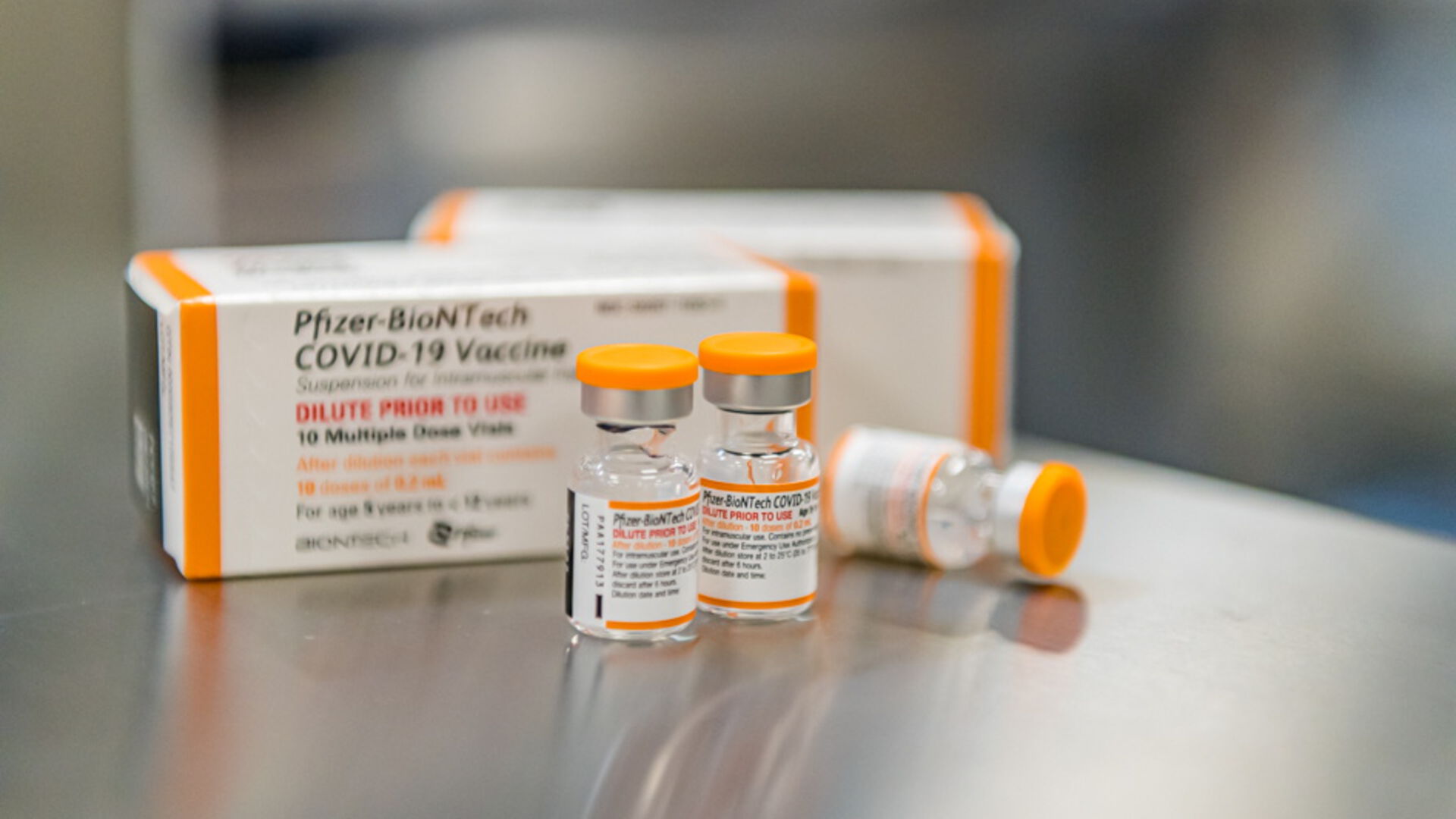
Dr. Larry Kociolek, infectious disease specialist, Lurie Children’s Hospital:”We have been fortunate to have a highly effective and a very safe vaccine for adults and adolescents for the last several months, and now these data show that we also now have a very safe and effective vaccine for children five to 11 years of age. And so I find that very reassuring. It’s another step in the right direction for equipping physicians to be able to provide protection to children in order to move forward and get us out of this pandemic.”
“The vaccine effectiveness was about 91%. That means the risk of developing COVID-19 after exposure is substantially less compared to those who are not vaccinated.”
“If we compare antibody responses in adolescents and young adults, children five to 11 years of age who get that lower dose, their antibody levels are just as strong. And so that allows us to use a dose that’s about 70% lower in children aged five to 11 than has been used in adolescents and young adults. Presumably, that would mean fewer side effects.”
“People point out accurately that the rate of severe complications and death in children is much lower than adults. That’s correct. But we know that children are not free from the harmful effects of this virus.”
“Widespread community transmission is primarily the reason why schools aren’t back to normal, why many sports don’t look like what they looked like before the pandemic. And children, we know, can transmit this virus to other people in the community that are more vulnerable.”
“Vaccinating children will be really important for us to be able to return to normal life as we know it and to continue to protect everybody in our communities.”
“It would be unlikely that we would consider any child fully vaccinated by Thanksgiving because it’s the two-dose regimen given three weeks apart. And then you would be considered fully vaccinated two weeks after that dose. And so you won’t be fully vaccinated until at least five weeks after your vaccine.”
“Families that seek their first shot by mid-November, that those children will be considered fully vaccinated by the winter holidays at the end of December.”
Dr. Rochelle Walensky, Director, Center for Disease Control and Prevention: “Right now, we don’t have booster eligibility for all people, currently, so we are going to we have not yet changed the definition of fully vaccinated. We will continue to look at this. We may need to update our definition of fully vaccinated in the future. But right now, what I would say is if you’re eligible for a booster, go ahead and get your booster. And we will continue to follow.”
“So even after you boost, it remains important for us to remain smart about our prevention strategies. While we still have over 93% of our counties with high or moderate community transmission, currently around 64 million Americans remain unvaccinated, leaving themselves and their children, their families, their loved ones and communities vulnerable.”
“Some people may have a preference for the vaccine type that they originally received because they did very well with their initial series. For all three vaccines, this is perfectly fine. And now, with 10 months of vaccine experience, some may have an express preference for one booster type over another. FDA’s authorizations, and CDC’s recommendations now allow for this type of mix and match.”
“All three COVID-19 vaccines authorized in the United States are extraordinarily safe, as demonstrated by the over 410 million vaccine doses already given, and they are highly effective in reducing the risk of severe disease, hospitalization and death even in the midst of the widely circulating Delta variant.”

MOST POPULAR
-
 Reuters
Thousands of migrants flew into US under new program. Where did they go?
-
 Straight Arrow News
Republicans say Speaker Johnson is not weakened by Democratic support
-
 The Metals Company
Deep sea mining may end US reliance on China, enviro concerns remain
-
 Getty Images
USC commencement speakers pull out after valedictorian speech canceled