

Commentary
-
Our commentary partners will help you reach your own conclusions on complex topics.
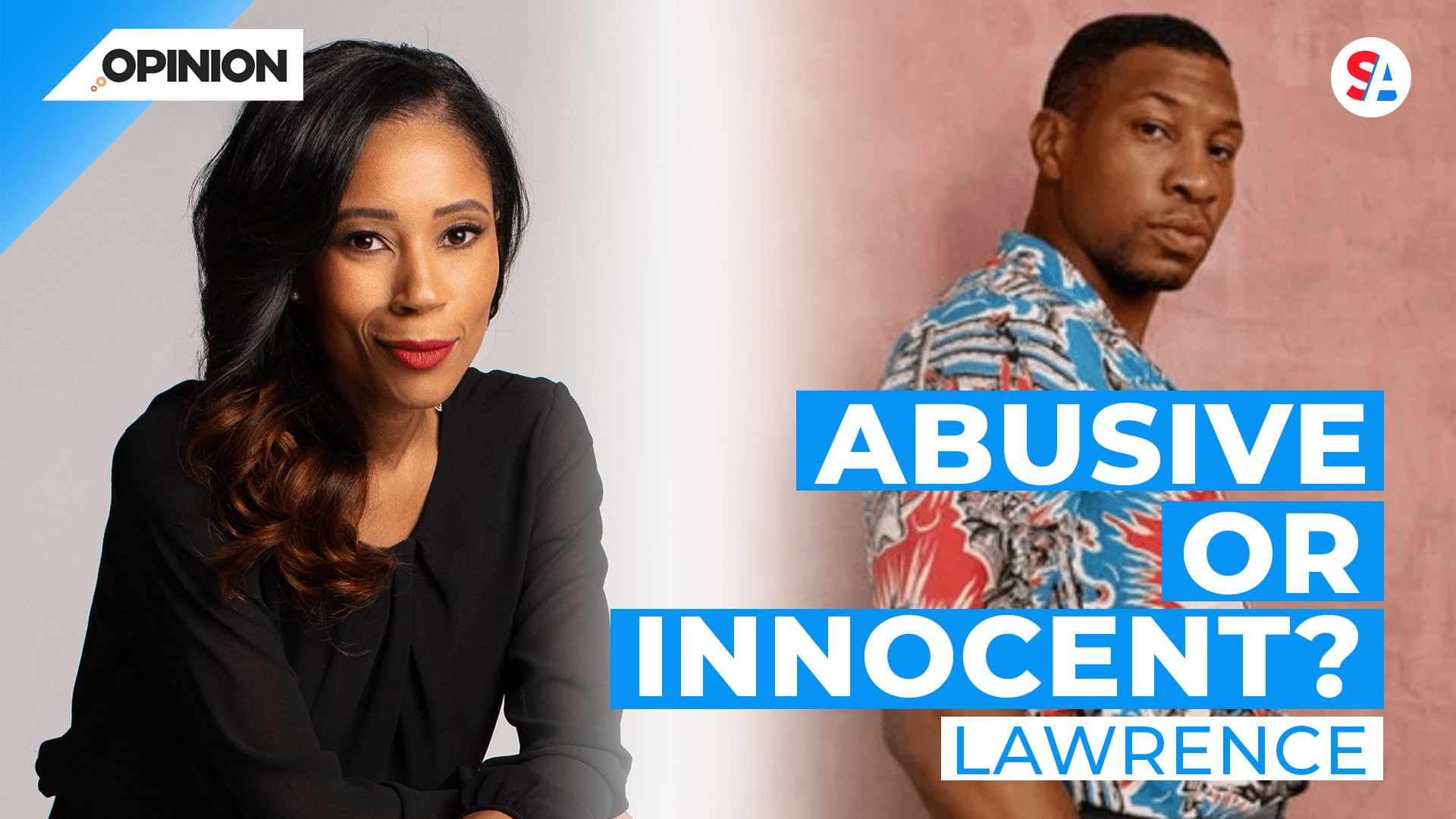
Over the weekend, actor Jonathan Majors’ banner year in Hollywood was interrupted by an arrest for domestic violence. The NYPD booked the 33-year-old star of the most-recent Creed and Ant-Man sequels on charges of strangulation, assault and harassment of a 30-year woman believed to be Majors girlfriend. Now although she reportedly was treated in a hospital with injuries to her head and neck, the next day Majors’ attorney said the woman recanted her police statement twice and that video of the incident shows that Majors did nothing wrong.
Now while I’m not here to convict Majors as the criminal justice system must still play out, I am concluding that our society still has so much work to do as it concerns understanding how abuse works. The online conversations surrounding the allegations against Majors were abhorrent. It’s like folks slept through MeToo. For example, two filmmakers came forward on Twitter indicating that Majors has a history of toxic behavior that was known in his circles at Yale and in his theater groups. Now these men were unwilling to share names of individuals that Majors had allegedly harmed and they were condemned for it.
Some people demanded to know why they didn’t come forward sooner; others spewed hate. One of the filmmakers reported experiencing threats and “queerphobic” comments. The other filmmaker shut down his Twitter account, shortly after Disney’s Marvel (which made Ant-Man sequel) started following him. Regardless of the veracity of those filmmakers’ remarks about Majors, how they were treated is exactly why people don’t come forward about abusers. Our society punishes individuals who speak out more than we punish the alleged abuser, particularly when they’re celebrities. An entire court in England said it was fair to call Johnny Depp a wife beater, yet Amber Heard was roasted in the court of public opinion and the court of law here for implicitly doing so.
It took over a hundred women to speak out against now-convicted rapist Harvey Weinstein before he faced any consequences, and that’s despite the fact that it was an open secret in Hollywood for so long that he was an abuser. Actor Brendan Frasier, blacklisted for more than decade because he spoke out against his high-powered assailant. People remain silent because our society is inclined to uplift abusers and it’s poised to victim-blame. This is what happens when we look to maintain systems of oppression. The person with more power, or the individual whose narrative gets to preserve power structures, often gets the benefit of the doubt.
We also often want to think of the survivor brought it upon themselves somehow, as though it means we’re less likely to face a similar fate by simply existing. This condemnation of accusers and doubting of domestic violence survivors, it was on full display this weekend, as were racial conversations. Given that Majors is a black man and his accuser is reportedly a white woman, the situation conjured the historic narrative of white women crying wolf about Black men, knowing that the system is pitted against them and also that the system is going to use protection of white female innocence as a means of advancing anti-Blackness. This is all a la the prosecution of boxer Jack Johnson in 1912, the murder of Emmett Till, the 14-year old, in 1955.
The history is alive and well. We just saw Amy Cooper in Central Park in 2020 try to leverage her white womanness to the detriment of bird watcher Christian Cooper. It’s real. At the same time, alleged interracial domestic violence does not warrant a pass simply because of historic wrongs. We still must invest in investigating the incidents and do so with equal fervor as we do other domestic violence cases. Now that being said, our society must do better in terms of treating domestic violence seriously. Not only is it prevalent, in that 1 in 4 women and 1 in 9 men will experience severe intimate partner violence in their lifetime, but it’s often not talked about enough. If you’re a numbers person, well, according to the National Coalition Against Domestic Violence, victims of intimate partner violence lose a total of 8.0 million work days, paid work days, each year. The cost of intimate partner violence exceeds $8.3 billion per year. The business case is just as big as the case in favor of humanity. Domestic violence is harmful to our society, claiming the lives of police officers and it’s often behind many who commit mass shootings. We need to take these matters seriously, and it’s evident that we don’t given much of the discourse that was on display this weekend.
Over the weekend, a number of anti-domestic violence advocates took Majors’ arrest very seriously given that he was charged with strangulation. And that’s because they know that strangulation survivors are some 750 percent more likely to be killed by the abuser in the future. A lot of people don’t know that—but they should. We’ve gotta do a much better job at educating on domestic violence and abuse. Again, we don’t know how Majors’ case will shake out — he has maintained his innocence and according to his attorney, the woman has recanted. But we do also know that recantation is very common when it comes to domestic violence. We also know that we need people to do better. It’s not only that it’s survivors that are watching how individuals are speaking out about survivors and allegations, but also because these abusers are watching and seeing what they can get away with.
Video Library
-
Supreme Court must end criminalization of homelessness
On April 22, the U.S. Supreme Court addressed the nation’s homelessness crisis, considering whether an Oregon city had the right to ban homeless people from camping in public spaces. A majority of justices appeared inclined to support the city’s efforts to regulate homeless encampments on public grounds. This decision carries significant implications for the growing…
-
Why are non-consensual pelvic exams still happening?
More states are beginning to crack down on the surprisingly common practice of medical students and professional staff performing non-consensual pelvic exams on unconscious men and women in hospitals, universities and other medical facilities. Just one year ago today, those practices remained legal in a majority of U.S. states. Now, however, a new directive from…
-
Congress should repeal the Foreign Dredge Act
The collapse of Baltimore’s Key Bridge presents challenges for cleanup and construction crews who rely on dredging vessels to complete their work. That’s partly because of the Foreign Dredge Act, a 1906 law that prohibits foreign-made dredging vessels. Congress is now introducing a measure to revise parts of that law, although previous attempts to do…
-
Gen Z women must fight for their rights
Gen Z, the first “digital native” U.S. generation, is entering the workforce, studying at university and serving in the military. From school shootings and cyber-bullying to COVID-19 and the overturning of Roe v. Wade, this generation has been shaped by unique trends and events, and how they will behave as citizens and voters is an…
-
Users must have rights in Big Tech’s AI race
Big Tech companies across the board, including Meta, X, Amazon, Microsoft, and Alphabet are racing to draft policies that enable them to use user-generated content to train advanced generative AI models without user permission or compensation. The Federal Trade Commission is investigating where it can, but government regulations lag far behind the rapid pace of…
Latest Opinions
-
 Getty Images
Biden uses NFL draft ad to try to connect with young voters
-
 Getty Images
Powering pot: Energy for US cannabis industry could electrify 13.5M homes
-
 Getty Images
Allies plan for Trump to have more control over interest rates
-
 Getty Images
FDA: Bird flu found in 1/5 commercial milk samples, suggests greater spread
-
 Reuters
China permanently deploys warships to second overseas base
Popular Opinions
-
In addition to the facts, we believe it’s vital to hear perspectives from all sides of the political spectrum.