

Commentary
-
Our commentary partners will help you reach your own conclusions on complex topics.
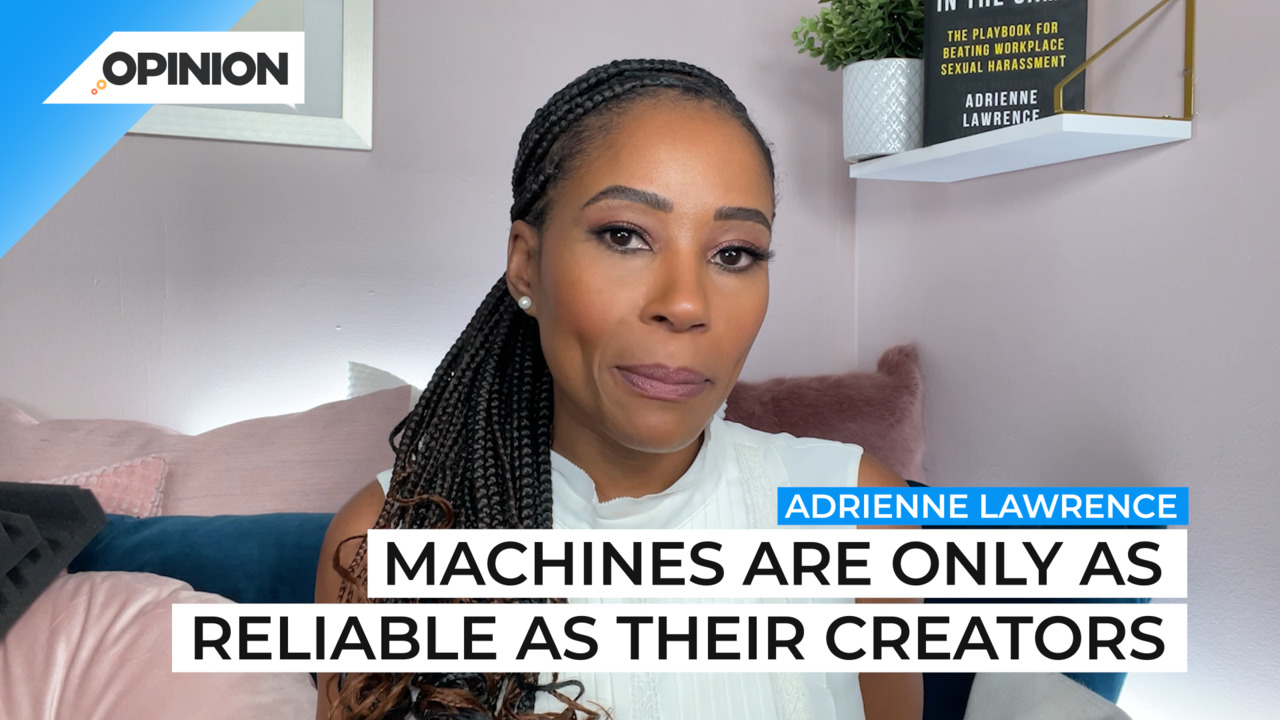
San Francisco’s Board of Supervisors green-lit a plan that would allow its police department to activate robots that can use deadly force. If arming robots isn’t a dystopian nightmare in the making, I don’t know what is. Law enforcement is already unreasonably and unnecessarily militarized. Injecting armed robots into the equation will simply threaten more lives….. starting with those in San Francisco, it appears. What is the city’s leadership thinking? The Board of Supervisors vote was 8 to 3, so it’s not like the decision was teetering on reasonable. The Board majority seems to think that citizens should not be concerned because San Francisco PD promises only to arm robots with explosives, rather than firearms. They also promise the robots will be used sparingly and only with the approval of the police chief, assistant chief of operations or deputy chief of special operations. These promises are not comforting. In fact, they ring hallow as police also promise to protect and serve yet so many of us marginalized people are unprotected and ignored—if not targeted. Since 2000, some 58 people have been shot and killed by police in San Francisco. Black people make up around 5 percent of the city, but over 30 percent of fatal police shootings. At least 14 percent of those killed by police were unhoused, even though the homeless represent just 1 percent of San Francisco’s population. And 38 percent of those shot by SF police have a history of mental illness. And so on. It’s the vulnerable members of society who disproportionately suffer at the hands of SFPD. American law enforcement has been trained to shoot first and ask questions later. Time and again, officers show us that they do not have the wherewithal and training to de-escalate situations or exercise sound judgment when interacting with marginalized communities. They do not need remote robot technology armed with lethal force. Also, during the summer of 2020, we saw officers across the nation use excessive force and inhumane tactics to silence first amendment protestors. So do they really expect us to believe police would only use these robots as a last resort? If I can’t trust the person, why would I trust the machine? In that same vein, we also must bear in mind that these robots are machines. Machines are only as reliable as their creators. We’ve seen time and again that those who create technology have blind spots that often translates to harm suffered by people who look like me. Whether it’s intentional AI discrimination or accidental programmer error, racial and gender bias is built into the system. When that kicks in for SFPD’s killer robots, I’m sure the machines will enjoy qualified immunity too. And if they don’t, when something goes wrong, it’ll be the people of San Francisco — the taxpayers footing the bill. Speaking of bills, according to the Mayor’s office, the San Francisco police department is already getting a fifty million dollar bump in 2023, bringing their budget to seven hundred and fourteen million dollars. You’d think San Francisco’s leaders could find better ways to spend taxpayer funds than giving officers deadly toys to enhance their already ridiculous militarized arsenal. San Francisco’s neighbor Oakland had the same option to employ deadly robots and they passed on it. And rightly so. San Franciscos’s Board of Supervisors needs to get it together and recognize that, like their constituents, deadly robots aren’t toys.
More from Adrienne Lawrence
-
Trump-Vance ticket will implement nationwide abortion ban
Donald Trump recently accepted the Republican nomination for president and named Sen. J.D. Vance, R-Ohio, as his running mate. Vance has previously advocated for strict anti-abortion laws, in sharp contrast to Kamala Harris, the leading Democratic candidate, who went on a nationwide tour to mobilize pro-choice voters. Watch the above video as Straight Arrow News…
-
End of Chevron is an open invite for corporate corruption
On June 28, the U.S. Supreme Court overturned 40 years of “Chevron deference” in a landmark ruling that experts say will cause a “legal earthquake.” The 6-3 conservative opinion upends a long tradition of relying on neutral expertise to interpret and execute laws and regulations. Broadly speaking, the ruling empowers judges and corporations at the…
-
American democracy cannot survive if Trump wins
Public alarm over the chances of democracy surviving in America has reached a new high-water mark in the wake of the Supreme Court’s July 1 ruling in Trump v. United States, where the court expanded presidential powers for all current and future U.S. presidents. Among other things, the court may have granted U.S. presidents the…
-
Talk to your kids about sextortion
The FBI is warning Americans of a growing threat called sextortion, where online predators pose as young, single individuals to lure their victims, primarily single teenage boys, into a blackmail trap. After soliciting sexual photos or videos of the victim, the predator threatens to release the images or videos unless the victim sends money and/or…
-
Louisiana’s Ten Commandments law proves Gov. Landry is corrupt
On June 20, GOP Gov. Jeff Landry of Louisiana signed into law a new bill that requires all public Louisiana school and university classrooms to display a poster-sized printout of the Bible’s Ten Commandments. The law violates existing legal precedents regarding the First Amendment and is expected to be challenged in the Supreme Court, although…
Latest Opinions
-
 U.S. Department of Defense
Congress still trying to figure out how to reduce wasteful military spending
-
 DVIDS
DVIDS
US Navy, Air Force making waves with new weapons at RIMPAC
-
 Getty Images
Israeli PM Netanyahu meets with Trump at Mar-a-Lago
-
 Getty Images
Growing US nuclear power resurgence reaches the nation’s heartland
-
 Getty Images
Beer from the sun, other solar thermal projects get government funding
Popular Opinions
-
In addition to the facts, we believe it’s vital to hear perspectives from all sides of the political spectrum.