

Commentary
-
Our commentary partners will help you reach your own conclusions on complex topics.
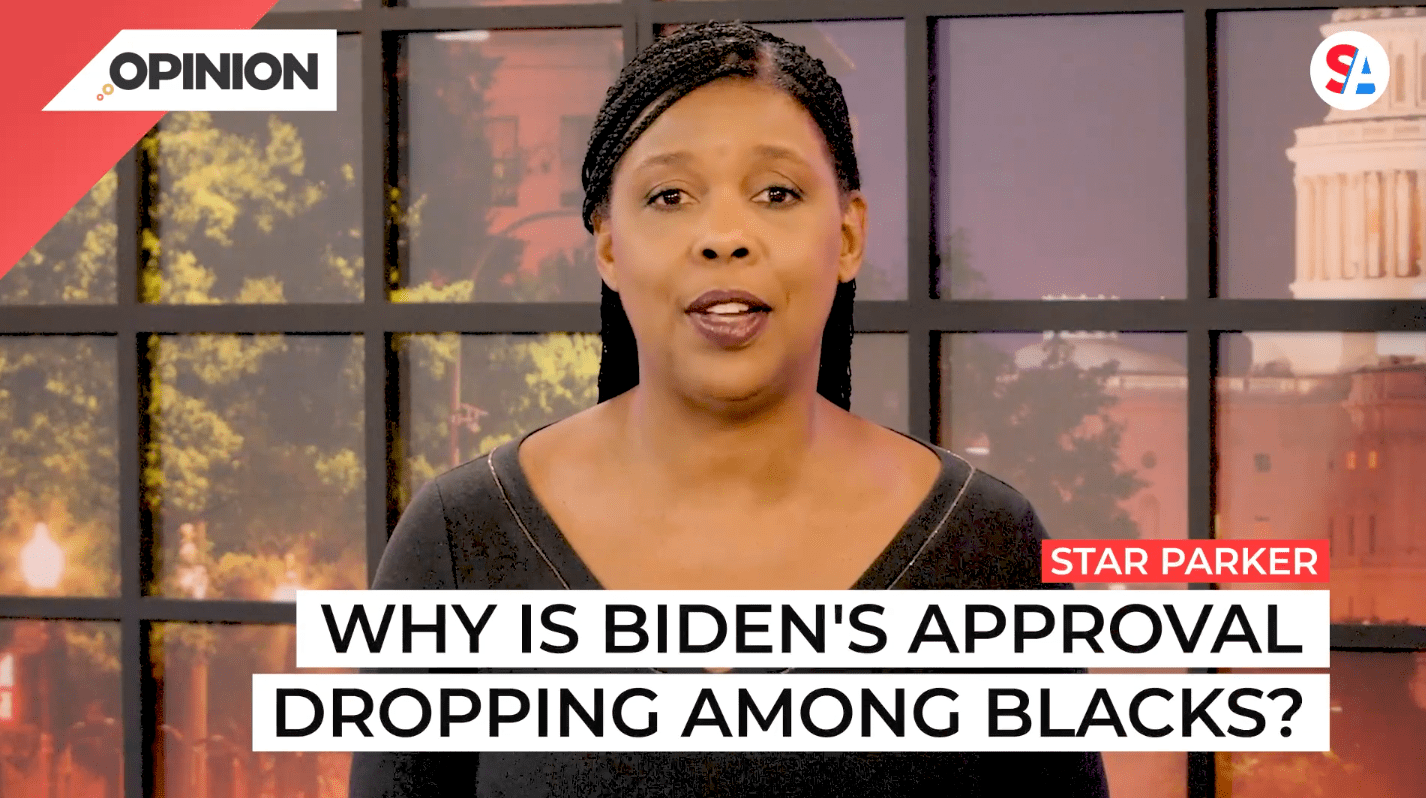
A new report from Pew Research shows that the sharpest drop in approval for President Biden is among Black protestants.
In March 2021, shortly after he took office, President Biden’s support among African American protestants stood at 92 percent. By January 2022 this was down to 65%, a drop of 27 points.
Other polls among all black voters tell the same story.
An NBC poll showed Black approval for Biden dropping from 83% last April to 64% now.
Democrat strategists must be worried that a sea-change is occurring among voters on whom they could always most depend.
Trying to define some new grand reality is always a dangerous game in political analysis and sometimes both Republicans and Democrats get it wrong. But what we can do is note two major areas of great concern to African Americans where they have reason to be dissatisfied with the leadership they see in Washington, D.C.
One is inflation.
The president and his Federal Reserve chairman bear responsibility for the new round of inflation now disrupting American lives, and especially those at the lower end of the economic scale.
The Wall Street Journal recently noted in an editorial that the now 7.5 percent increase in the price level is the worst in 40 years. During January some 73% of items saw annual price increases of 3% or more and some 55% of items saw inflation of 5% or higher.
It’s getting pretty tough out there, especially at the gas pump as well as the grocery store.
A Gallup poll in December showed that 71% of households earning $40,000 per year or less reported hardship as result of these price increases – 28% reported “severe hardship” and 42% reported “moderate hardship.”
These are households that are disproportionately African-American households. Some 55 percent of Black households earn $50,000 or less.
The terrible irony is that the major rationale for all the spending of the Biden administration, it was allegedly to help the very low-income Americans that are now being really hurt by the Biden policies.
The other issue Blacks are dismayed with President Biden is COVID.
According to the Kaiser Family Foundation, after adjusting for age differences, the incidence of hospitalizations due to COVID have been almost three times higher among Blacks than whites. And the incidence of death – almost twice as high.
A new Gallup survey showed 69 percent of African Americans reporting being “very stressed” or “somewhat stressed” because of a threat of COVID infection, compared to 57 percent of white Americans.
Morning Consult reported that in the three weeks following Biden’s announcement of these federal rules mandating vaccines, Black approval for Biden’s handling of the crisis dropped 9 points – from 70 percent to 61 percent. Among unvaccinated African Americans? Biden’s net approval dropped 17 points.
One might say that the Biden administration has been just totally operating in a fashion detached from the very real and challenging realities in which African Americans have been struggling. These are real problems for real people, and DC just seems to be way out of touch.
Day to day life and the cost of living, and health concerns during the terrible pandemic are good reasons to believe that this is what’s causing Biden’s approval ratings to plummet with African Americans.
The open question is which way they will vote about these concerns come November?
More from Star Parker
-
Trump has an excellent opportunity with Black voters
Former President Donald Trump’s gains with Black voters have narrowed since President Joe Biden dropped out of the 2024 race. Prior to his dropping out, polling indicated that Biden was losing support among Black voters, who had been vital to his 2020 victory. The Trump campaign has been courting Black voters, using the recent Republican…
-
Biden is wrong to support Supreme Court reform
The Supreme Court’s public legitimacy crisis continues to escalate after it issued a series of major recent decisions perceived by many Americans as overtly partisan, most recently the July 1 ruling in Trump v. United States. Calls to reform the Supreme Court long predate these rulings but have gained significant momentum and popularity in their…
-
Liberals stir fear over Supreme Court immunity decision
In a landmark decision, the Supreme Court ruled July 1 in Trump v. United States that presidents are immune from prosecution for any presumably “official” act taken while in office, including criminal acts. Some legal experts and liberal justices were “horrified” by the opinion and warned of grave consequences, while Chief Justice John Roberts, in…
-
Debate disaster raises questions about Biden’s capacity to lead
Even former House Speaker Nancy Pelosi, D-Calif., has stated that it’s valid for voters to question President Joe Biden’s mental health given his recent debate performance. Lawmakers from the opposing party are calling for a select committee to examine his mental health. Watch the video above as Straight Arrow News contributor Star Parker argues that,…
-
Black Americans should vote for Donald Trump
In the 2020 elections, 92% of single-race Black, non-Hispanic voters cast their ballots for President Joe Biden, while only 8% voted for Donald Trump. That one-sided turnout followed a summer of nationwide protests against police violence largely organized by Black Americans in the wake of George Floyd’s murder, and then-President Trump’s crackdown on those protests…
Latest Opinions
-
 U.S. Department of Defense
Congress still trying to figure out how to reduce wasteful military spending
-
 DVIDS
DVIDS
US Navy, Air Force making waves with new weapons at RIMPAC
-
 Getty Images
Israeli PM Netanyahu meets with Trump at Mar-a-Lago
-
 Getty Images
Growing US nuclear power resurgence reaches the nation’s heartland
-
 Getty Images
Beer from the sun, other solar thermal projects get government funding
Popular Opinions
-
In addition to the facts, we believe it’s vital to hear perspectives from all sides of the political spectrum.