


From
the Left

Opinion

Our commentary partners will help you reach your own conclusions on complex topics.
One of the most important events in terms of both government and politics to happen recently was the House Republican passage of increasing the debt ceiling, but only doing so with a very large $4.1 trillion cut in spending.
This was important because when they passed it, even though it was only by one vote, it created a fact. Had they lost that vote — had it been one vote down instead of one vote up — then everybody in the news media would have said, well, the House Republicans don’t have any role here. They can’t get their act together, etc.
Now, the only people in Washington who have actually done something on the debt ceiling, are the House Republicans. They’ve passed a bill which would raise the debt ceiling until next year. But in doing it, they’ve insisted on very significant conservative reforms and legislation. And they’ve insisted on cutting $4.1 trillion out of the spending pattern for the next decade. That was an enormous achievement, the biggest cut ever passed on a debt ceiling bill.
It’s interesting to watch, because now, the Democrats have two problems. The first is that well, Democratic Majority Leader in the Senate, Chuck Schumer, said the bill was dead on arrival. The fact is, Schumer probably can’t get anything out of the Senate, because the Senate Republicans are not going to vote for an unreformed debt ceiling.
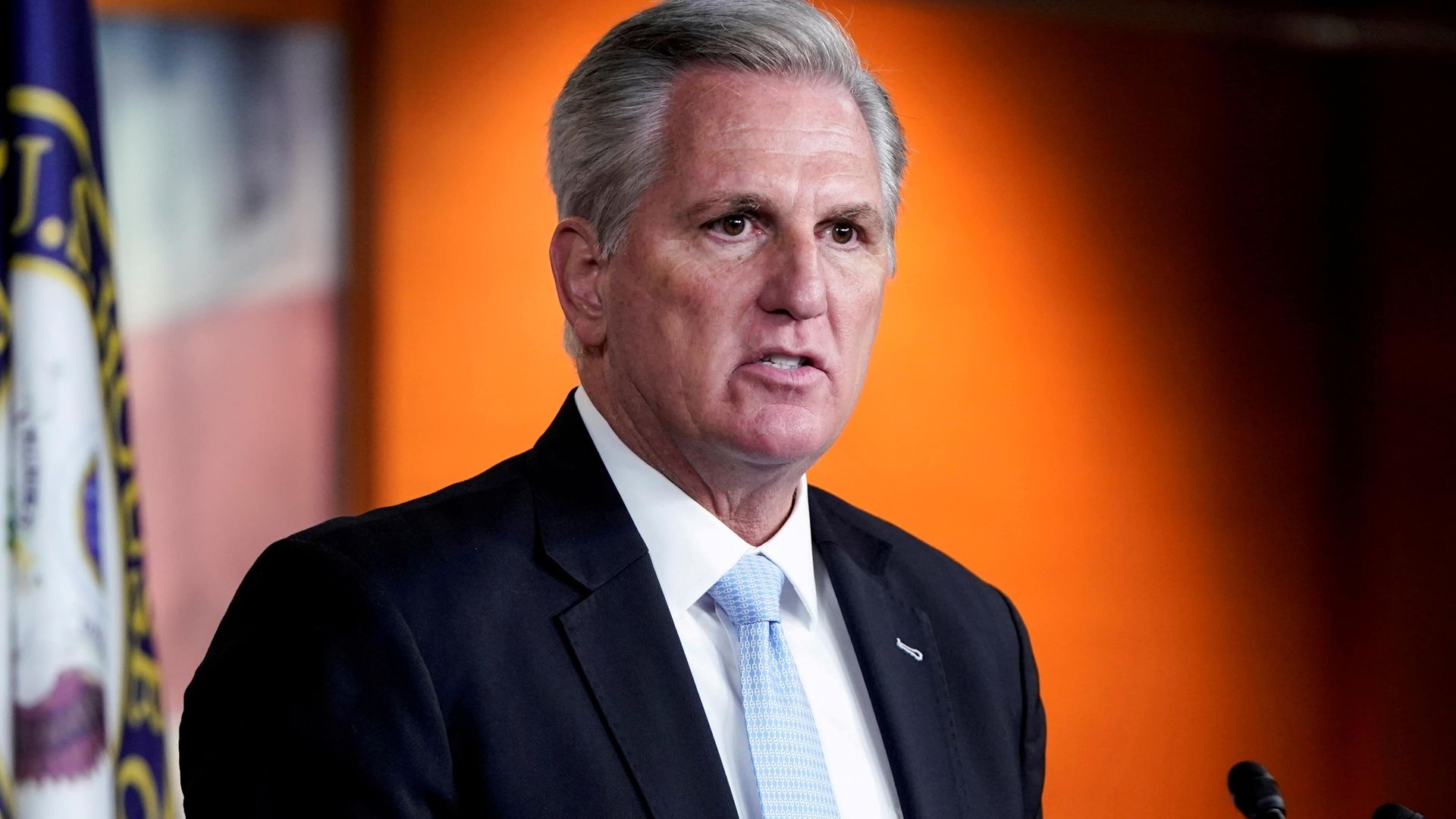
And Schumer is committed to standing with President Biden and not fixing the debt ceiling with spending cuts. So the result is going to be that the only game in town is going to be the House Republican debt ceiling bill which speaker McCarthy did an amazing job, inch by inch piecing together exactly what has to be done, including two significant changes the night before the vote, to make sure that the last votes were there.
You know, when you only have a four or five vote margin, you really have to work hard to try to get everybody on board. The fact is, Speaker Boehner couldn’t do it, Speaker Ryan couldn’t do it. And it’s a significant achievement by Speaker McCarthy to have gotten this done.
Now, the question is what does President Biden do? Their first reaction was to say we’re not going to negotiate. Well, they have a problem. Among the American people, according to Scott Rasmussen, only 24%, — one out of every four — want to have a debt ceiling increase, with no changes. About 46% of American people are willing to have a debt ceiling increase if there are cuts in spending. But an additional 16% don’t want a debt ceiling increase at all, period, under any circumstance.
So in fact, while almost three to one, the American people are opposed to President Biden’s position — that the only thing he’ll do is sign a debt ceiling that has no changes. It’s going to sink in over the next 30 to 60 days. it’ll get to be a crisis. The business community will go nuts, the news media will go crazy. President Biden will use really harsh, really strong language. But in the end, the objective fact that was created is that Speaker McCarthy and the House Republicans have the only game in town.
The only currently legislated alternative to the U.S. government defaulting on its debt is, in fact, the McCarthy bill. And I think that’s going to be the beginning of the negotiation, not the Biden position. So what you’re watching is history in the making. It could be the first real turnaround step towards getting back to the balanced budget and back to a system where we limit inflation, we limit taxes, we limit deficits and have a much healthier economy. But this was a very big week.
It’s been a busy couple of months in Europe. The U.K. elected the Labour Party for the first time in well over a decade. In France, the New Popular Front (NFP), a Leftist coalition, which won the most seats in Parliament during the snap elections, announced its preferred candidate for prime minister: little-known civil servant…
In one week, former President Donald Trump survived an assassination attempt, selected a vice presidential running mate and become the official Republican nominee for president. Trump is ramping up his campaign to challenge his likely opponent, incumbent President Joe Biden, in November. Watch the video above as Straight Arrow News contributor Newt Gingrich celebrates Trump,…
The Republican National Convention will be held in Milwaukee from July 15 to 18, where former President Donald Trump is expected to be formally chosen as the party’s nominee for the 2024 election. The Democrats will gather in Chicago from Aug. 19 to 22, where Democratic leaders say they will reaffirm their support for President…
On July 2, 1776, the Second Continental Congress voted unanimously in favor of American independence from Great Britain, and formally adopted the final text of the Declaration of Independence two days later. Americans today mark July 4 as a national holiday to commemorate their independence and celebrate their hard-earned victory in the Revolutionary War. Watch…
In the United States, restaurant servers are paid below minimum wage and earn the majority of their incomes from tips left by customers. Even after accounting for these tips, a 2015 analysis concluded that the total median hourly income for a server in the U.S. was just $13, while bartenders earned only $9. Former President…
 U.S. Department of Defense
 DVIDS
DVIDS
 Getty Images
 Getty Images
 Getty Images
In addition to the facts, we believe it’s vital to hear perspectives from all sides of the political spectrum.
In addition to the facts, we believe it’s vital to hear perspectives from all sides of the political spectrum. We hope these different voices will help you reach your own conclusions.
The opinions published in this section are solely those of the contributors and do not reflect the views of Straight Arrow News.

Thursday

Leon Aron

John Fortier

Matthew Continetti

Robert Doar
Learn more about our emails. Unsubscribe anytime.








Latest Commentary
We know it is important to hear from a diverse range of observers on the complex topics we face and believe our commentary partners will help you reach your own conclusions.
The commentaries published in this section are solely those of the contributors and do not reflect the views of Straight Arrow News.
Peter Zeihan
Geopolitical StrategistHow future generations could shift US support for Israel
Why election of European Commission president is so important
Protests in Bangladesh signal more trouble ahead
Dr. Frank Luntz
Pollster and Political Analyst‘I don’t know’: Swing voters debate who best to replace Biden
‘Mad as hell’: Americans vent anger, frustration over politics
‘On death’s door’: Undecided voters react to first debate